

"I want a period-style dress." This is one of the requests we receive most often. But "vintage" on its own doesn't mean much: there's a world of difference between the English aristocracy of 1813, the Roaring Twenties, and the relaxed glamour of the 1970s.
A vintage wedding dress incorporates the elements of a specific era (a high neck and Bridgerton-style puff sleeves, 1920s beaded lace, flowing 1970s satin, or 1970s folk sleeves) in a modern, comfortable cut. The secret to not looking like you're in costume: choose the era that matches your personality, and stick to just one or two of its elements.
This guide will help you find yours: three major styles, the fabrics and details that create a true vintage look (plumetis, beaded lace, macramé), and our custom-made designs.
Vintage or retro: what's the difference?
Vintage: the dress references a specific era (the 1810s, 1920s, 1950s, or 1970s) and uses fabrics and details that truly evoke it.
Retro: it's more vague. The dress has "an old-fashioned look," without it being possible to say which decade it's inspired by.
A beautiful vintage dress doesn't copy an era; it pays homage to it. Colors play a big part: ivory, cream, champagne, or ecru rather than stark white, for that slight patina that says "I have a story."

Style 1: the modern aristocrat (Bridgerton style)
This is for you if: you've devoured The Bridgerton Chronicles, you love presence and an upright, proud posture, and you want a dress that commands respect while remaining romantic.
Here, we're looking for structure: a high neck, lace that climbs up the neck, and a defined waist.
Plumetis: the touch that softens everything
Plumetis is a tulle sprinkled with small, raised embroidered dots. Paired with a very Victorian high neck, it may seem risky on paper... but it looks magical in person: the collar frames the face like a painting, while the plumetis puff sleeves add an airy, almost mischievous touch. Does plumetis look too much like a little girl's dress? Not with a feminine cut: a defined waist, sheer panels, and lace make it very sophisticated.
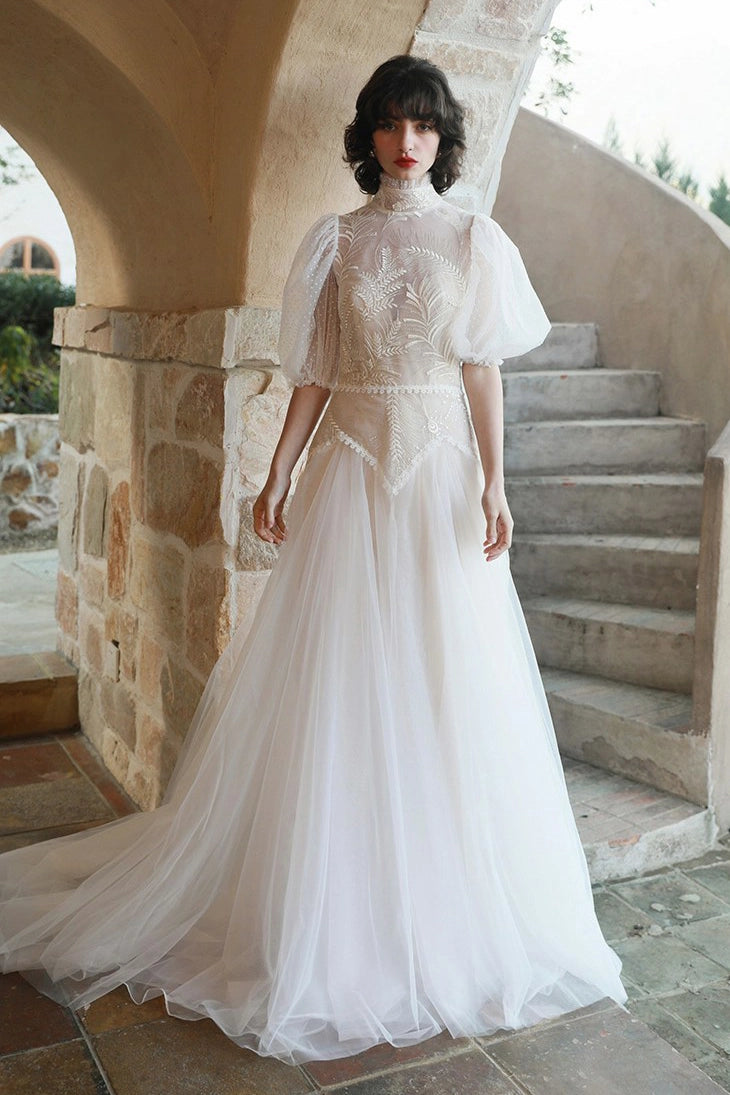
Your perfect match: the High-Neck & Plumetis-Sleeve Vintage Dress
Our modern interpretation of Victorian style. The basque waist (the pointed cut at the front) sculpts the bust, the lace collar adds structure, and the plumetis sleeves soften the look.
View the High-Neck DressStyle 2: the glamour of the 1920s (Gatsby style)
This is for you if: Bridgerton style seems too strict to you. You dream of lightness and radiance, you want to float down the aisle and shine, but subtly.
Beaded lace: a shower of light
If plumetis is "retro-cute," beaded lace is "retro-glamour." No dazzling sequins: micro-beads applied by hand that follow the floral design. The dress doesn't shine; it sparkles, as if covered in dew. Romantic and airy by day, it literally lights up by the candlelight of the dinner.

Your perfect match: the Tulle & Beaded Lace Backless Vintage Dress
Four layers of extra-fine tulle form a cloud around you; the beaded lace bodice catches every ray of light. And the back? A plunging open back that contrasts with the modesty of the front.
Discover the Beaded DressIs beaded lace heavy? A little heavier than plain tulle, yes. But the bodice is structured to carry the weight: it rests on the waist, not on the shoulders.

Style 3: the 1970s bohemian
This is for you if: you admire Bianca Jagger's style, you want to be a cool bride who focuses on cut and fabric, or on the contrary, a folk bride, barefoot in the grass with a crown of wildflowers.
The 1970s were the golden age of bohemian style. Brides of the era rejected rigid, formal dresses: make way for flowing dresses, outdoor ceremonies, and a flower-power spirit. Two families were born from this.
Minimalist 70s: satin and puff sleeves
The return of flowing satin: it's smooth, graphic, and bold. The satin glides over the skin, while the puff sleeves add a very "fashion" volume. Simple, yet unforgettable.

Your perfect match: the Satin & Puff-Sleeve Vintage Dress
The dress for confident brides, with an open back to boot. To learn all about this style, read our retro wedding: the great return of satin and puff sleeves article.
View the Vintage Satin DressFolk 70s: lace, romantic sleeves, and embroidery
Typical 1970s sleeves are puffed at the shoulder, fitted at the forearm, and then full again at the wrist, in sheer lace or muslin. They are paired with slightly naive floral embroidery and, the absolute signature of the era, macramé lace: a knotting technique that creates geometric or floral patterns.

Long-Sleeve Open-Back Vintage Dress
Romantic sleeves in the front, open back in the rear: modest and free at the same time.
View the dress
Vintage Bohemian Oriental Dress
The vintage spirit meets delicate oriental embroidery and a drape that calls for travel.
View the dress
Silk Satin & Vintage Lace Dress
Matte silk satin enhanced with lace appliqués: retro elegance, with the utmost discretion.
View the dress
Civil Dress in Flowing Satin with Flowers
Subtle vintage, perfect for the city hall: discreet floral patterns, without a costume effect.
View the dress
Modest in the front, daring in the back: open back and mermaid
Vintage doesn't mean stuffy: the 1920s were about partying and freedom. You can play retro while being very feminine, with one simple rule: modest in the front, fatal in the back.
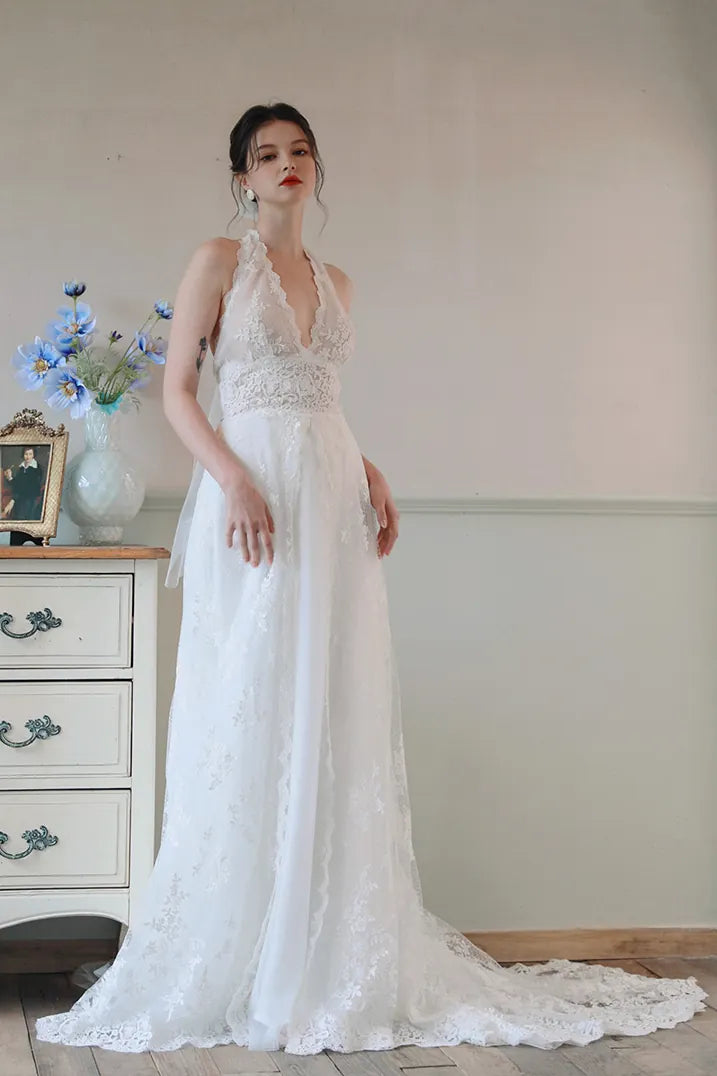
The surprise: Lace Open-Back Dress
From the front, a classic vintage dress. From the back, a neckline down to the small of the back.
View the dress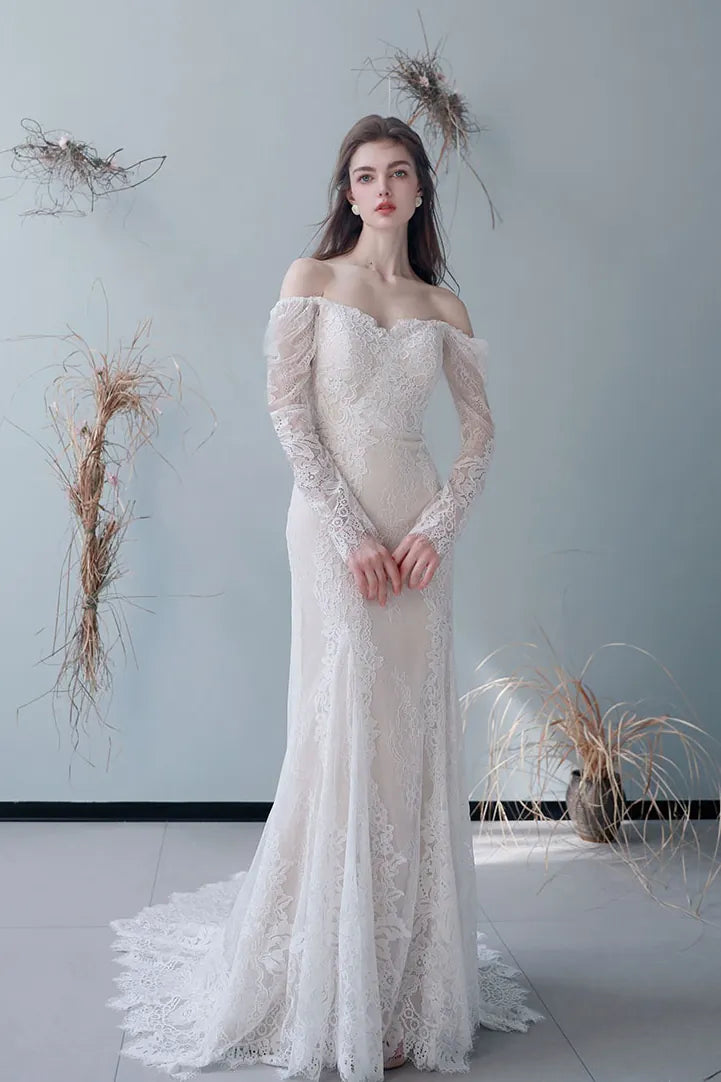
The architecture: Open-Back Lace Mermaid Dress
For those who embrace their curves: a mermaid dress that shapes the hips without squeezing.
View the dress
Vintage Bohemian Lace Open-Back Dress
Defined waist in the style of the 1950s–70s, modern open back: romance and sensuality combined.
View the dress
Fabrics and details that define vintage
The fabrics
Fine lace (Chantilly style): the ultimate vintage lace, fine, with delicate floral patterns. Plumetis: for a light and playful vintage look. Beaded lace: for a glamorous vintage look. Matte satin: for a minimalist vintage look, 1930s or 70s. Muslin: for folk sleeves and flowing skirts.
Signature details
High neck (often combined with an open back), puff sleeves or long sleeves buttoned at the wrist, fabric-covered buttons along the back, Basque waist, floral embroidery.
How to avoid the costume effect
Want to mix vintage and romantic? Read our romantic wedding dress: styles, lace, and bohemian spirit guide.
Accessorizing a vintage dress
Detachable sleeves: the chameleon accessory
You already have a simple dress and want to give it a vintage touch for the ceremony? Don't change your dress, change the sleeves. Our detachable lace sleeves transform a modern strapless dress into a period dress: wear them for the church, take them off for the evening.

The veil
Very ornate dress (beads, patterns)? Tone it down with a simple tulle veil. Simple skirt? Dare a full lace mantilla, or a veil edged with ivory lace, elbow or fingertip length. See our bridal veils.
Hat, gloves, and crown
A small hat or headpiece for a 20s or 50s look, lace gloves for Bridgerton, or a wildflower crown (daisies, wildflowers, slightly unstructured) for the 70s. Discover our hats and our bridal gloves.
Jewelry
Patinated gold-tone brass, antique pearls, and stones such as amber or turquoise for the 70s; drop earrings and no necklace with a high collar.
Frequently Asked Questions
What is the difference between a vintage dress and a retro dress?
A vintage dress is inspired by a specific era (the 1810s, 20s, 50s, or 70s); a retro dress has a more general old-fashioned look, without reference to any particular decade.
How to avoid looking like I'm in a costume in a vintage dress?
Keep only one or two elements from an era, choose a modern and comfortable cut, and balance it: an elaborate dress with simple accessories.
What is plumetis?
It is tulle sprinkled with small raised embroidered dots. On a wedding dress, it adds a light and retro touch, especially on the sleeves or a veil.
Is a vintage dress suitable for all body types?
Yes, thanks to custom-made tailoring: a high collar can be adjusted so as not to shorten the neck, and corset-style lacing at the back allows the lace to follow your curves without constricting.
Which veil should I choose with a vintage dress?
A simple tulle veil if the dress is very elaborate; a lace mantilla if the dress is understated. For the 70s, a mid-length veil edged with ivory lace.
When should I order my custom vintage dress?
Allow 5 to 8 weeks for production and delivery. We recommend ordering about 3 months before your wedding; is your date closer? Write to us, we will do our best to accommodate you.
What if my weight changes before the wedding?
Choose a model with lacing at the back, which offers flexibility. If you anticipate a significant change, wait until it has stabilized before taking your measurements and placing your order.
Modern-day lady, icon of the Roaring Twenties, or seventies bohemian: vintage has a look for every bride. The important thing is not to copy an era, but to find the dress that tells your story.
